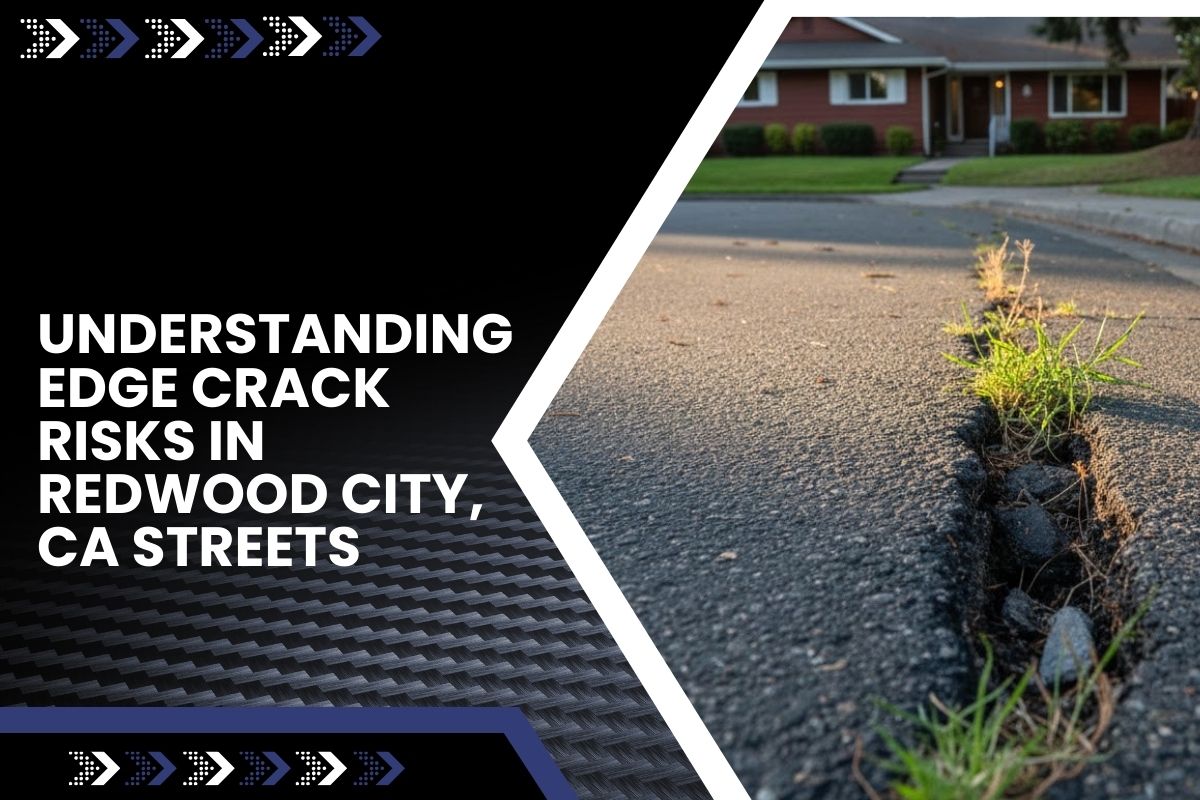
Edge Crack Risks in Redwood City, CA affect drivers more than many people realize. As you travel local streets, you may unknowingly steer through thin gaps along the pavement edge. These cracks start small yet can quickly grow, changing how safe and comfortable your daily drive feels.
Weather, traffic, and even maintenance choices slowly wear down the street surface. At first, the damage seems cosmetic. However, these faults can weaken entire road sections and increase hazards for cars, cyclists, and pedestrians. By learning why edge cracks appear and how they spread, residents can better support solutions that protect neighborhood streets.
When you drive through Redwood City, you might see thin, rough lines running near the pavement edge. These lines are edge cracks and they are early warning signs of pavement stress. They often form where the shoulder meets the travel lane, creating weak spots that can spread if nobody repairs them in time.
In a city that depends on daily car travel, even small defects can cause bumpy rides or steering surprises. Local road crews watch these cracks because they reveal deeper problems, such as trapped water and a damaged base layer. To see how local streets and glass safety connect, visit our Redwood City, CA auto glass services page.
Local soil conditions and weak support under the asphalt strongly affect pavement health. When the ground settles unevenly or is not compacted well, stress builds along the road edge. Heavy cars and delivery trucks turning onto side streets push down on these areas, slowly bending the pavement until fine cracks appear.
Water creates even more trouble. Rain and yard runoff collect near the shoulder and then soak into pavement layers. Without good drainage, moisture breaks the bond between the asphalt and the base. During cool mornings, freezing water expands and widens small gaps. These conditions increase Edge Crack Risks in Redwood City, CA along busy neighborhood streets.
Drivers first notice edge cracks as light bumps or wobbles when a tire drifts toward the shoulder. Low cars or vehicles with narrow tires may lose grip or feel sudden pulls at the wheel. Motorcyclists and cyclists face even higher danger because a wheel can fall into a gap and cause a sharp loss of balance.
As cracks widen, more water reaches the base and turns small openings into potholes and broken edges. Drivers may then swerve or brake suddenly to avoid these spots, which raises the chance of rear-end collisions. Damaged streets can also slow emergency vehicles, making it harder for them to reach people quickly when every second matters.
Redwood City’s coastal climate brings mild, wet winters and warm, dry summers. During winter, rainfall seeps into tiny openings at the pavement edge. When early morning temperatures drop, trapped water may freeze and expand. As it thaws later in the day, it leaves behind wider spaces that weaken the road.
Summer brings a different stress. Heat softens asphalt, making it more likely to bend under heavy cars and trucks. At the edges, this soft surface begins to split and form small cracks. Season after season, the repeating cycle of soaking, drying, heating, and cooling slowly enlarges the damage along local streets.
Busy streets in Redwood City carry commuters, delivery vans, ride-share cars, and service trucks along the same paths every day. Many of these vehicles travel close to the edge, especially near parking lanes or bus stops. Over time, their repeated weight breaks down the shoulder and starts patterns of small fractures.
Turning movements add another layer of stress. At driveways and intersections, vehicles roll partly off the main lane and push sideways on the pavement. This sideways force pulls apart weak materials along the edge. Freight routes and commercial blocks experience this effect more often, so they usually develop larger and more frequent cracks.
Good maintenance begins with regular inspections. City crews map where edge cracks appear and watch how quickly they grow. Smaller cracks can often be sealed early with flexible materials that move with temperature changes. These sealants keep water out of the base layer and slow down further damage.
Severe cracking calls for stronger repairs. Workers may remove damaged asphalt and replace it with fresh material, restoring strength at the edge. Adding solid shoulders or concrete curbs gives the pavement better side support. Regular street sweeping also clears debris, allowing water to drain away and helping lower Edge Crack Risks in Redwood City, CA over time.
Not all edge cracks pose the same threat. Thin lines under about one third of an inch wide are usually minor and can often be sealed quickly. Medium cracks, from one third to one inch wide, signal deeper base issues that may require partial-depth repairs to prevent rapid spreading.
Wide cracks over one inch often connect with other damage, such as potholes or ruts. These serious defects can catch tires, damage rims, and throw cyclists off balance. By rating cracks from low to high severity, road crews can focus resources on the most dangerous sections first and keep travel safer for everyone.
Resurfacing worn pavement is a strong long-term fix. A new asphalt layer smooths the surface and covers many small cracks. This method works best when the damage is wide but not extremely deep. For roads with serious structural problems, full-depth reconstruction may be needed to rebuild the base and surface together.
Other helpful strategies focus on drainage and support. Edge drains move water away from weak pavement layers, while curbs or geotextile fabrics strengthen the shoulder. Traffic plans can redirect heavy trucks away from fragile residential streets. Together, these actions reduce current damage and lower the chance that new cracks will appear.
Residents are key partners in keeping roads safe. When drivers report new cracks or potholes through city apps and phone lines, crews can respond sooner. Neighborhood groups can organize simple “street check” walks, share photos of damage, and help create maps that point out problem spots before they become serious hazards.
Public meetings and advisory boards give citizens space to discuss road safety, traffic calming, and drainage needs. Schools and community centers can host short talks on how to spot pavement issues and explain why quick reporting matters. This teamwork between neighbors and city staff builds cleaner, smoother streets for daily travel.
An edge crack is a narrow line that forms along the side of a paved road, usually near the shoulder. It often starts small but can grow into longer and wider gaps if heavy traffic, water, and weather keep stressing the same area.
The shoulder often has less support than the main travel lane. When soil is weak, drainage is poor, or vehicles frequently drive near the edge, the pavement flexes more in that zone and begins to crack along the side.
Drivers can avoid riding on the very edge of the pavement when it is safe to do so, especially in wet weather. They can also report new cracks, potholes, or broken edges to the city so road crews can repair them before they worsen.
Yes. Hitting deep cracks or broken edges at speed can create strong jolts that vibrate through your vehicle. Over time, these impacts may worsen small chips in your windshield. For detailed support, review our winter windshield care tips.
If you notice new chips, lines, or star-shaped marks in your glass after traveling on rough streets, schedule an inspection soon. Early repair is usually faster and may prevent a complete replacement later.
Maintaining smooth roads benefits every person who walks, rides, or drives. By understanding how edge cracks form and how quickly they grow, residents and city leaders can work together to spot early warning signs and apply timely repairs that prevent bigger problems.
If rough streets have already damaged your windshield, you can contact Duran's Auto Glass for quick help. When people report Edge Crack Risks in Redwood City, CA, repair teams can act faster, protect vehicles, and keep local streets safer for years to come.