A heat cracked windshield can appear when hot glass cools too quickly. Direct sunlight may heat the outside while strong air conditioning cools the inside, creating stress that can turn a small flaw into a spreading crack.
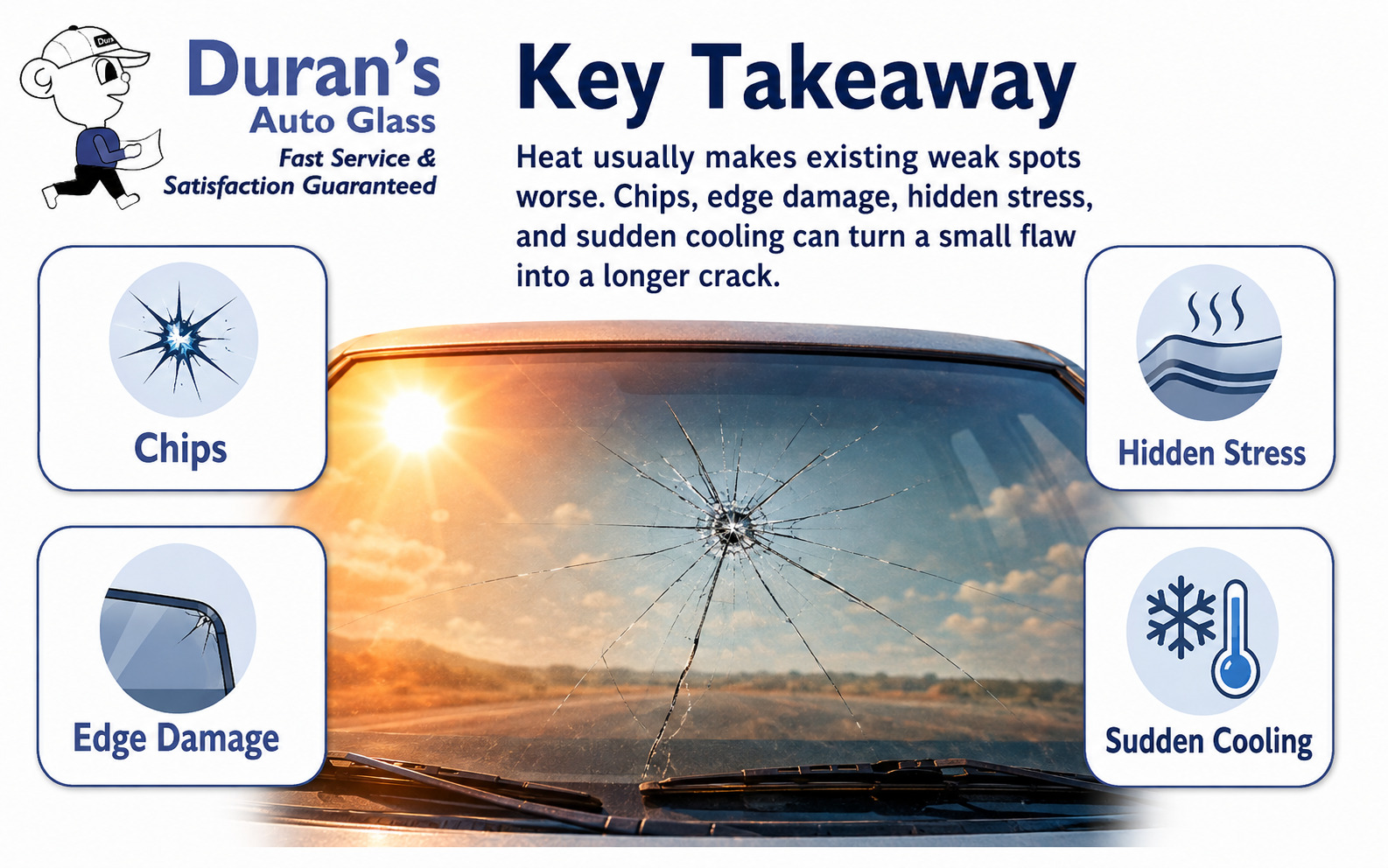
Windshields use laminated safety glass with several bonded layers. These layers are designed to remain together after an impact, but uneven heating can still place pressure on weak areas.
The edges, existing chips, and installation points are often more vulnerable to temperature changes. A windshield cracked from the heat may begin as a thin line near an edge or old chip.
Vehicle vibration, changing weather, and repeated heating and cooling can then make the fracture longer. Our team can inspect the damage and explain the available options.
Yes, thermal stress can cause glass damage even when no rock or object strikes the windshield. However, a tiny chip, weak edge, or hidden flaw often becomes the starting point.
Sudden cooling from maximum air conditioning can increase the pressure on glass that is already very hot. This is why small chips should not be ignored during warm weather.
Drivers can review our windshield chip repair guide to see why small damage should receive attention before another heat cycle causes it to spread.
A thermal crack may be difficult to notice at first. Inspect the windshield in natural daylight and look from several angles.
Avoid tapping or pressing the glass because added pressure may worsen the damage.
| Warning Sign | Why It Matters | Helpful Next Step |
|---|---|---|
| Thin line near the edge | Edge cracks can spread quickly and affect windshield support. | Request an inspection before the crack grows. |
| Crack grows after parking in heat | Repeated heating and cooling may be stressing weak glass. | Park in shade and avoid sudden cooling. |
| Glare or distorted view | Visibility problems can make driving less safe. | Ask whether repair or replacement is safer. |
| Old chip develops new lines | Heat can expand damage around an existing chip. | Schedule chip or crack evaluation promptly. |
| Moisture marks inside the crack | Dirt or moisture can make repair harder. | Keep the area dry and avoid pressing the glass. |
Some heat-related cracks start as fine lines. Others appear near corners, older chips, or areas that already felt weak.
With Duran's Auto Glass, you can arrange an evaluation when a crack affects visibility, reaches an edge, or continues to spread.
Fast attention matters when cracks affect visibility, reach an edge, grow after heat exposure, or appear near an old chip.
Simple habits can lower the risk of sudden glass stress. Gradual temperature changes are especially important after a vehicle has been parked in direct sunlight for a long period.
More preventive steps are available in our windshield crack prevention tips. Protective coatings may improve surface performance, but they cannot repair structural glass damage.
Move the vehicle into a shaded area when it is safe. Do not blast cold air onto the hot windshield.
Let the cabin cool gradually to reduce additional pressure on the damaged area. Clear tape may help keep moisture and dirt out temporarily, but it does not restore windshield strength.
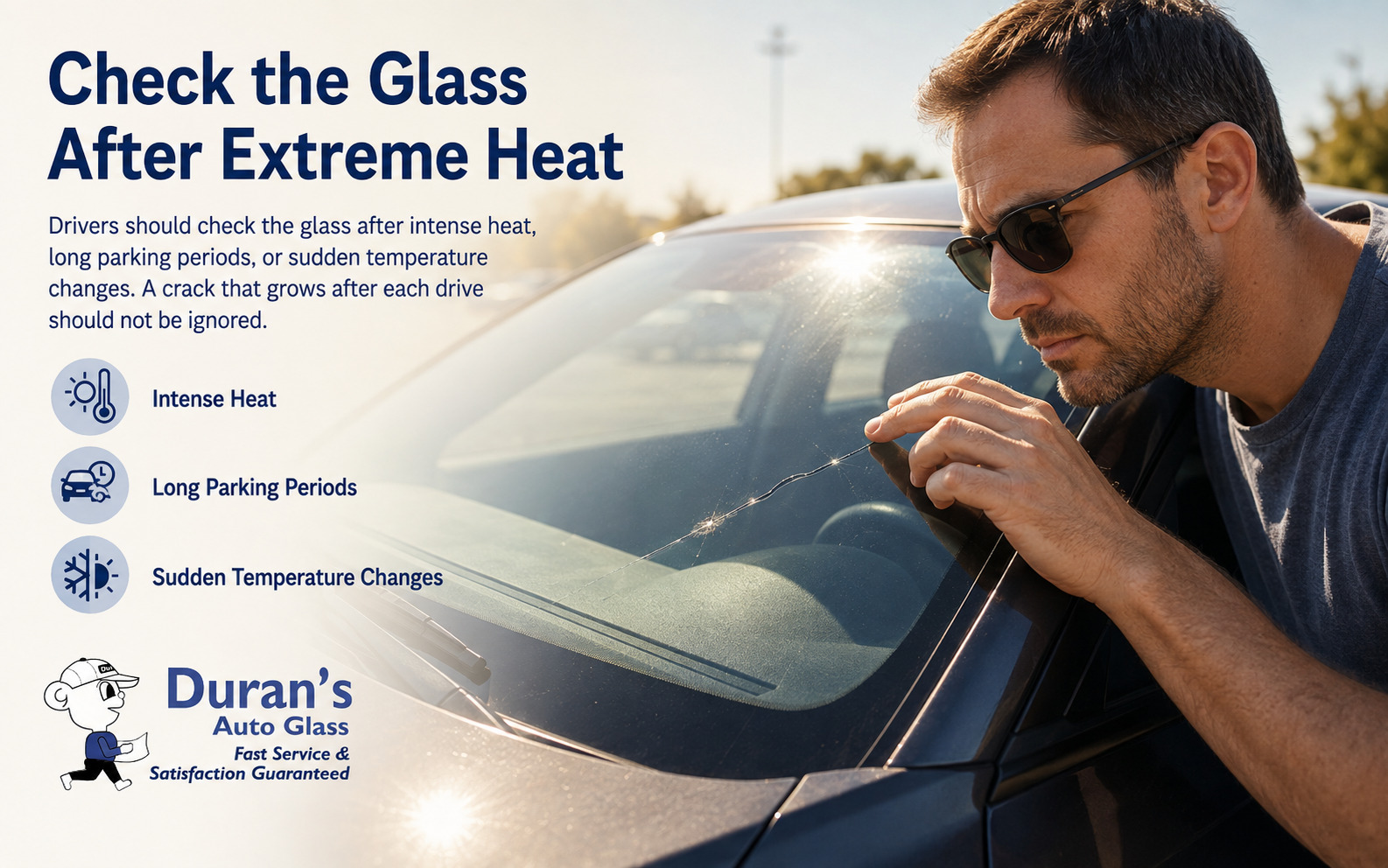
Clear tape is only a temporary barrier against moisture and dirt. It does not guarantee that the crack will stop spreading. At Duran's Auto Glass, we assess the location, depth, and length before recommending service.
After finding a crack, keep the glass cool gradually, avoid pressure, keep the area clean, and arrange an inspection before the damage spreads.
Heat cracked windshield repair may be possible when the damage is small, clean, shallow, and away from the glass edge. A technician can remove moisture and air before injecting resin that helps stabilize the affected area.
Replacement may be safer when the crack is deep, contaminated, rapidly spreading, or located within the driver’s direct view. Damage that reaches the edge can also reduce structural support.
Explore our auto glass services for more information about professional solutions.
Vehicles with windshield-mounted cameras or sensors may require calibration after replacement. The correct recommendation depends on the vehicle, the glass design, and the condition of the damaged area.
Uneven heating and sudden temperature changes create stress within the glass. Existing chips, weak edges, and installation problems can make the windshield more vulnerable. Our crack prevention guide explains useful ways to reduce this risk.
Driving may be unsafe when the crack blocks your view, reaches the edge, or keeps growing. Review our professional auto glass service options and arrange an inspection as soon as possible.
Yes. Heat can place added pressure around an existing chip and cause it to become a longer fracture. Our guide to windshield chip repair explains why early attention matters.
A home kit may temporarily stabilize certain minor areas, but results depend on the damage, moisture, dirt, and application. It cannot replace a professional assessment, especially when the crack is near an edge or affects visibility.
Replacement may be needed when the damage is large, deep, contaminated, close to an edge, or within the driver’s line of sight. A technician should inspect the windshield before deciding whether resin repair is suitable.
A heat cracked windshield rarely improves without attention. Keep the area clean, avoid sudden temperature changes, and limit vibration until the glass has been inspected.
When you choose Duran's Auto Glass, we examine the damage and explain the appropriate next step. Use our contact page to request an inspection and get clear guidance for your vehicle.