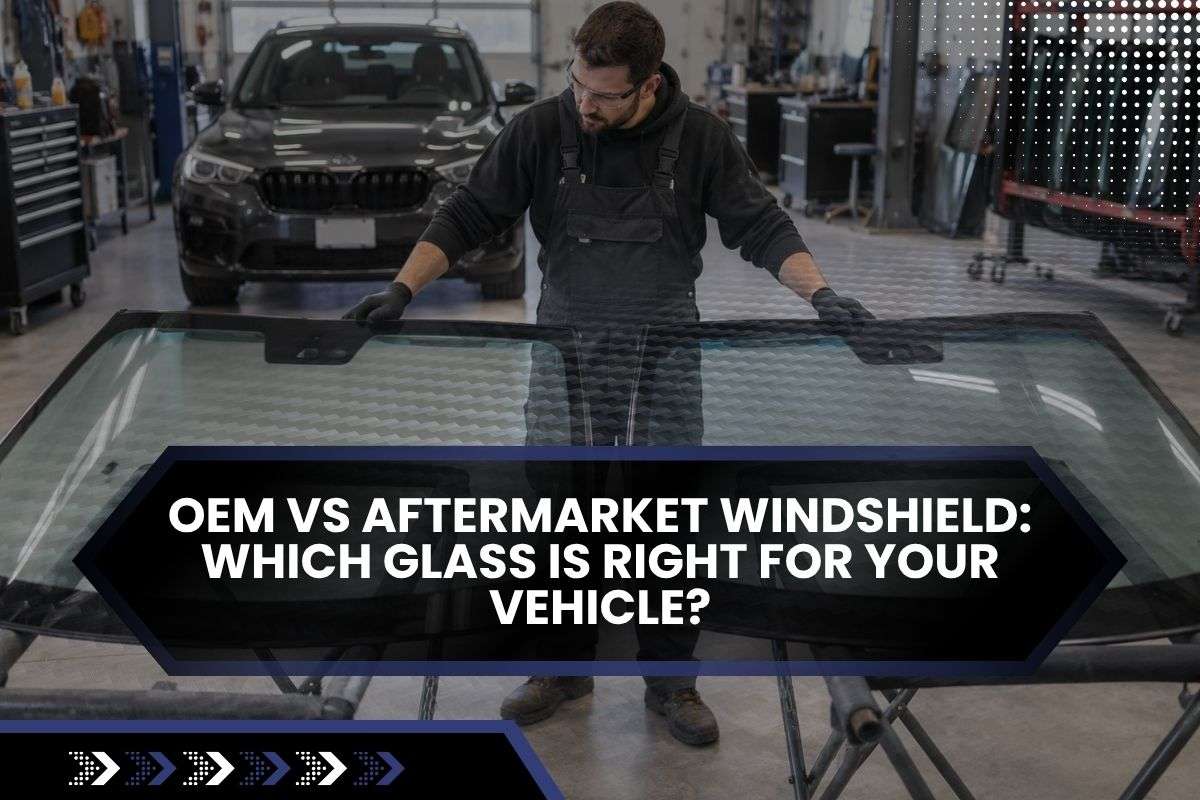
When a windshield has to be replaced, the decision is not always simply “new glass or no glass.” Drivers may be offered OEM glass, OEM-equivalent options, or aftermarket glass. The right choice depends on the vehicle, available parts, safety systems, budget, and the quality standards of the specific replacement.
At Duran's Auto Glass, we have provided fast and friendly Bay Area mobile auto glass service since 1994. We are licensed and insured and offer free estimates so drivers can understand their replacement options before the work begins.
OEM means original equipment manufacturer. In windshield discussions, it generally refers to glass made by the vehicle manufacturer's original supplier or glass carrying automaker branding and specifications for that vehicle.
OEM glass can be important for drivers who want the closest possible match to original markings, optical characteristics, tint, acoustic layers, camera brackets, or other factory details.
Aftermarket windshields are made for replacement use without necessarily carrying the automaker's branding. Quality can vary by manufacturer, so “aftermarket” is too broad a label to decide quality by itself.
Good replacement glass must fit the vehicle correctly and meet applicable safety requirements.
| Factor | OEM Glass | Aftermarket Glass |
|---|---|---|
| Automaker branding | Typically present | Usually absent |
| Fit and specifications | Factory-specific | Designed for replacement fit |
| Price | Often higher | Often lower |
| Availability | Can vary | Often broader |
| ADAS compatibility | Vehicle-specific | Must be verified by application |
Some aftermarket glass performs very well, while other options may differ in optical quality, acoustic layers, tint shade, frit patterns, brackets, or small dimensional details. The key is not to assume every aftermarket windshield is identical.
A knowledgeable installer should identify the correct part for your specific year, make, model, trim, and equipment.
Many newer vehicles use the windshield as a mounting location for forward-facing cameras and other driver-assistance equipment. Replacement may require careful glass selection and, depending on manufacturer procedures, calibration after installation.
Our guide to windshield replacement technology explains why vehicle features matter during glass selection.
OEM windshields often cost more because of branding, supply chain, and vehicle-specific specifications. Aftermarket options may reduce the glass cost, but price should not be considered without checking fit, features, installation quality, and any calibration needs.
Expert Tip: When requesting a quote, provide the VIN. It can help identify rain sensors, acoustic glass, heated areas, camera brackets, heads-up display features, and other variations.
A high-quality aftermarket windshield can be a practical option when it is correctly matched to the vehicle and installed using proper procedures. It may also be easier to source and can offer a lower replacement price.
If you are filing an insurance claim, coverage for OEM glass varies by policy. Some policies may pay for aftermarket parts unless an OEM endorsement or other provision applies.
Ask your insurer what your policy allows and whether any difference in glass price is your responsibility. Read more about OEM windshield benefits.
Mobile replacement can be convenient when the location provides a safe workspace and suitable environmental conditions. A correct installation still requires careful preparation, proper adhesive procedures, and the required safe-drive-away time.
See our windshield replacement services for available mobile options.
The best windshield is not automatically the most expensive or the cheapest. It is the glass that properly matches the vehicle, safety equipment, installation requirements, and your coverage or budget.
Request a free windshield replacement estimate from Duran's Auto Glass and get experienced Bay Area service from a team serving drivers since 1994.
Replacement automotive glass sold for road use should meet applicable federal safety requirements, but fit and feature quality can still vary by manufacturer.
Some aftermarket glass is designed for ADAS-equipped vehicles, but the exact part and calibration requirements must be verified for the vehicle.
It depends on your policy, endorsements, vehicle, and claim. Ask the insurer whether OEM glass is covered before replacement.
Yes. Availability and cost vary, so discuss the exact vehicle and glass option when requesting the estimate.
Yes. Duran's Auto Glass provides mobile auto glass service across the San Francisco Bay Area.