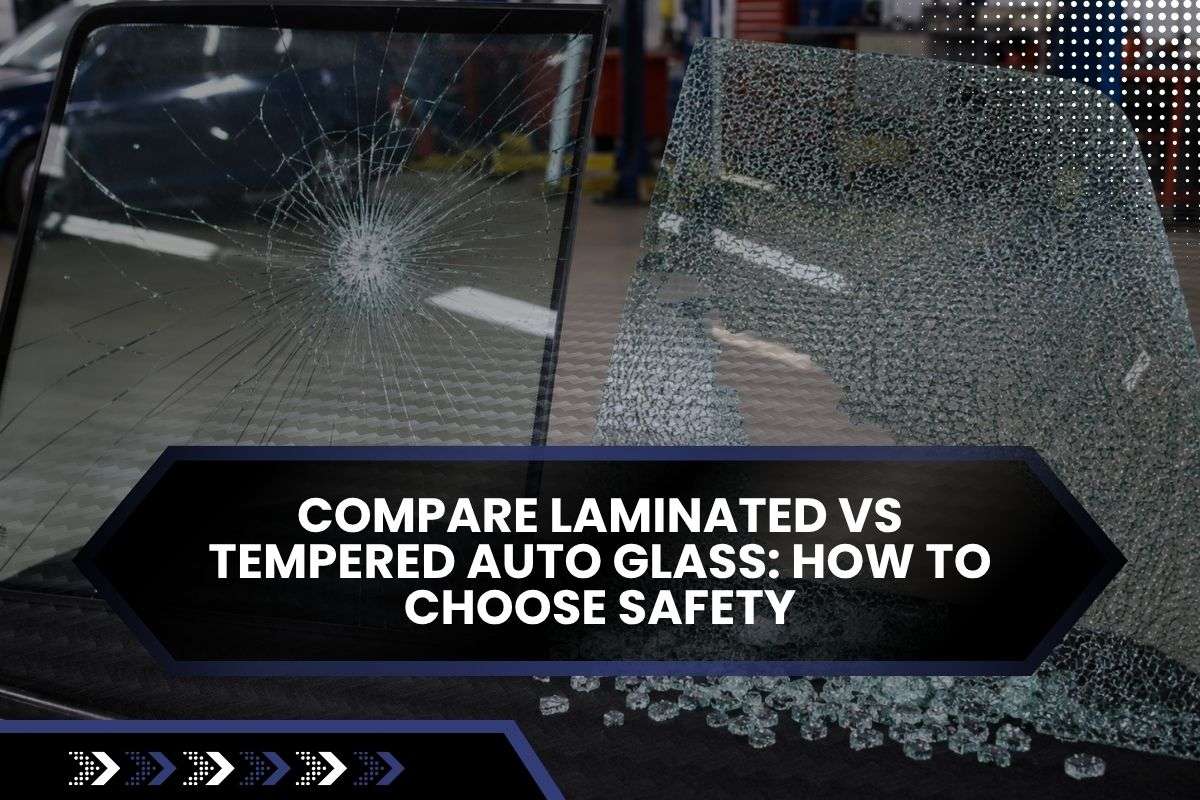
Choosing the right vehicle glass affects safety, visibility, and protection during an accident. Understanding laminated vs tempered auto glass helps you know why each window reacts differently under pressure. You can also explore our auto glass services when damage requires professional attention.
At Duran's Auto Glass, we help drivers understand the purpose of each glass type before replacement. Laminated glass usually protects the windshield, while tempered glass is common in side and rear windows. Each material has a specific role in keeping passengers safer.
Laminated glass has two glass sheets with a clear plastic layer between them. When the windshield receives an impact, this inner layer helps hold broken pieces together. The glass may develop cracks or a spiderweb pattern, but it usually remains inside the frame instead of falling into the vehicle.
This construction also explains the difference between laminated and tempered car glass. Laminated glass focuses on staying together after damage. For more information about common materials, review our guide to different types of windshield glass.
The answer to why windshields do not shatter like side windows starts with their layered design. A windshield must help protect passengers from debris while supporting the vehicle opening. Its plastic interlayer keeps many broken pieces attached, even when a crack spreads across the surface.
Side windows need a different break pattern. They are often designed to crumble into small pieces after a strong impact. This reduces the number of long, sharp shards. Our team at Duran's Auto Glass can identify the correct material by checking the window location and vehicle specifications.
Drivers often ask which car windows use tempered glass. In many vehicles, manufacturers place it in side windows and rear windows. Tempered glass receives controlled heating and cooling during production. This process makes it stronger than standard glass during normal use.
When tempered glass breaks, it usually separates into small, pebble-like pieces. This pattern can lower the risk of deep cuts compared with large shards. It also means the damaged panel normally requires full replacement rather than a simple crack repair.
The main difference between laminated and tempered car glass is how each material is made and how it reacts after damage. Laminated glass uses bonded layers that help the pane remain together. Tempered glass uses internal tension that causes it to break into many small pieces.
When comparing laminated vs tempered auto glass, neither option is meant to replace the other in every window. The two materials work together as part of the vehicle’s safety design. You can review additional windshield safety features to understand how glass supports protection and visibility.
Laminated glass often handles direct impact by spreading force across its layers. Tempered glass can resist daily pressure, vibration, and temperature changes. However, a hard strike near its edge may cause the entire panel to break at once.
Local streets, highway travel, road debris, and changing temperatures can all affect vehicle glass. A small stone may leave a repairable chip in a laminated windshield. The same type of impact can cause a tempered side window to break completely, depending on its force and location.
For drivers comparing laminated vs tempered auto glass, the correct choice usually depends on the original window design. Replacement glass should match the vehicle’s required type. With Duran's Auto Glass, you receive guidance based on the damaged panel rather than a one-size-fits-all recommendation.
Drivers seeking auto glass replacement in San Mateo should have cracks and broken windows checked promptly. Early attention can help protect visibility, reduce moisture entry, and prevent loose glass from creating additional problems inside the vehicle.
Good care begins with regular inspections. Check the windshield for chips, spreading lines, cloudy areas, and damage near the edges. Side and rear windows should also move smoothly without rattling. Dirt inside the window track can place extra pressure on the glass over time.
Laminated windshield damage may be repairable when the chip is limited and safely positioned. Tempered glass cannot be restored after it breaks. When you choose Duran's Auto Glass, we assess the damage, the window location, and the correct replacement approach for your vehicle.
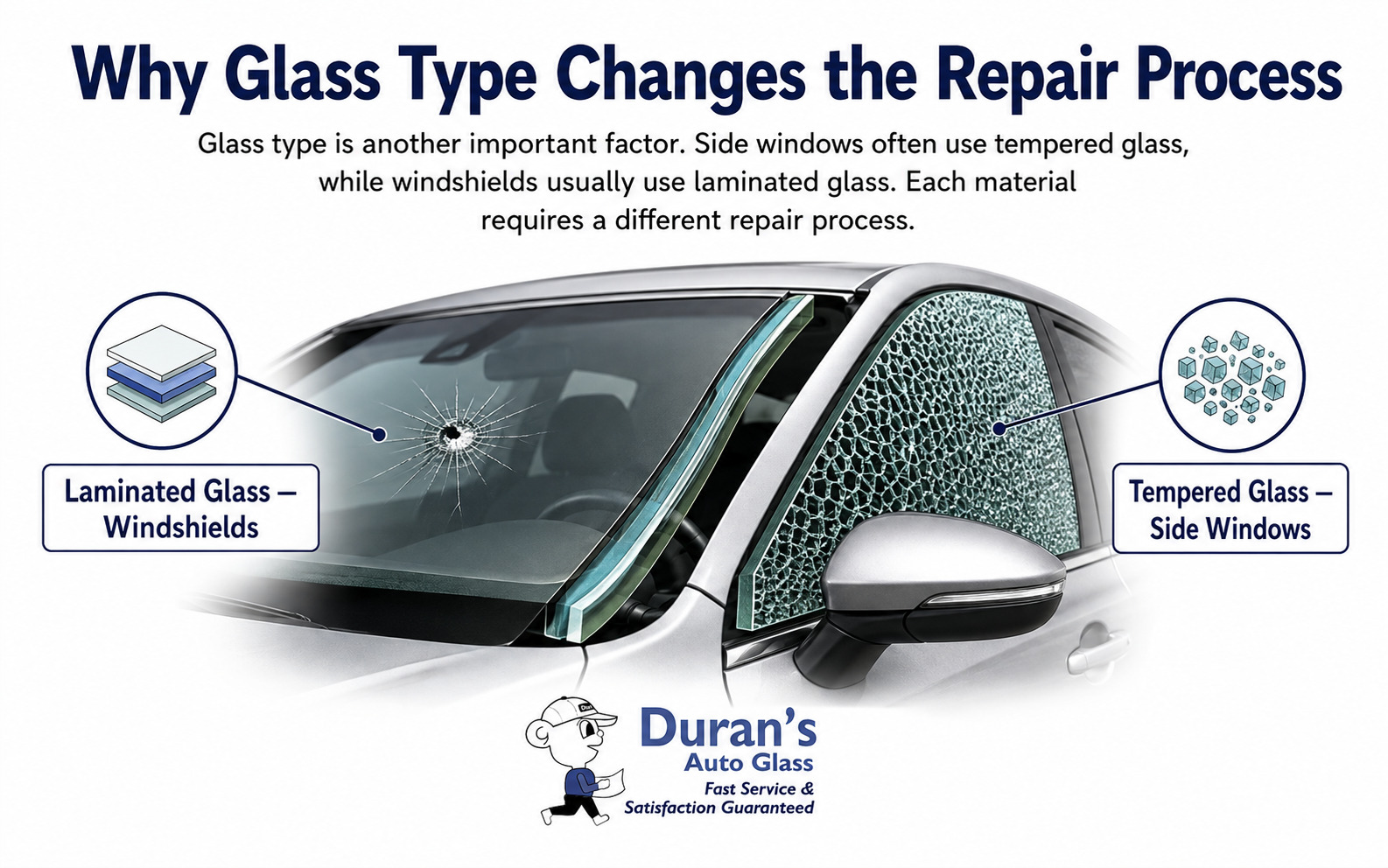
Laminated glass contains a plastic layer that helps it stay together after impact. Tempered glass is treated to break into small pieces. Our overview of common windshield glass types explains how these materials are used.
Windshields usually use laminated glass. The inner plastic layer holds many fragments in place after damage. This design supports visibility and reduces loose shards. Read more about windshield safety design and its role in vehicle protection.
No. Once tempered glass cracks or breaks, the full panel normally needs replacement. Its internal structure causes the entire window to lose strength. A technician must remove the remaining pieces, clean the frame, and install a window that matches the vehicle specifications.
Some vehicles may use laminated glass in certain side windows, but placement varies by model. The correct replacement should follow the original vehicle requirements. A glass professional can check markings on the panel and confirm which material belongs in that opening.
You can visit our San Mateo auto glass service page for local information. At Duran's Auto Glass, we help identify whether the damaged window requires laminated or tempered replacement glass.
Understanding laminated vs tempered auto glass makes it easier to recognize how each window protects your vehicle. Laminated windshields stay bonded after many impacts, while tempered side and rear windows break into smaller pieces. The safest replacement is the glass type designed for that specific window.
For auto glass replacement in San Mateo, start by sharing the location and condition of the damage. Use our auto glass contact page to request help, or review our San Mateo service information before scheduling your visit.